






The short answer: there is no single best pillow filling. Down and down alternative are the softest and lightest. Memory foam and latex give the most consistent support. Buckwheat is the firmest. Shredded fills (shredded memory foam, shredded latex, buckwheat) are the ones you can add to or take out of, which makes them the easiest to adjust to your height. Pick the fill that matches how you sleep, how warm you run and how much upkeep you want, then get the amount right.
This guide compares every common pillow filling side by side, explains what each one is actually made of, which sleepers it suits, and shows you how to refill or top up a pillow, a part most guides skip. We make shredded memory foam pillows, and where our own experience applies, we say so.
Every pillow filling at a glance
| Fill | Feel | Support | Adjustable? | Weight | Typical lifespan | Often suits |
|---|---|---|---|---|---|---|
| Down | Very soft, airy | Low | Fluff only | Very light | 1 to 3 years | Stomach and back sleepers who like soft |
| Feather | Soft, a little denser | Low to medium | Fluff only | Light | 1 to 3 years | Back sleepers, people who scrunch their pillow |
| Down alternative / polyester fiberfill | Soft to medium | Low to medium | Usually no | Light | 6 months to 2 years | Soft, feather-free, easy-wash pillows |
| Solid memory foam | Firm, slow sink | High | No | Heavy | 2 to 4 years | Side and back sleepers who like firm, even support |
| Shredded memory foam | Medium-firm, moldable | High | Yes, add or remove | Medium-heavy | 2 to 3 years, longer if topped up | Side, back and combination sleepers |
| Latex (solid or shredded) | Springy, responsive | High | Shredded only | Heavy | 2 to 5 years | Side and back sleepers who want bounce |
| Buckwheat hulls | Firm, moldable, rustles | Very high | Yes, add or remove hulls | Very heavy | Refresh hulls every 1 to 3 years | Sleepers who like very firm support |
| Microbeads | Light, beanbag-like | Medium | No | Very light | Short | Travel and neck pillows |
| Cotton | Firm, dense | Medium | No | Medium | Varies; compresses over time | People who want a natural, firmer fiber |
| Wool | Firm, springy at first | Medium | Sometimes | Medium | Varies; settles over time | People who want a natural fiber |
| Kapok | Silky, very light | Low to medium | Sometimes | Very light | Varies | People who want a soft plant-based fill |
Lifespans are the ranges published by the major pillow guides (see our guide to how often to replace a pillow). Where the guides give no consistent figure, we say "varies."
Natural fills
Down
Down is the soft, fluffy layer that grows beneath the outer feathers of ducks and geese. It has no quills, which makes it the lightest and softest natural fill.
- Good: very soft, light and easy to shape. It squashes down low, which many stomach sleepers want.
- Watch for: it compresses under your head, so it gives little support unless the pillow is very full. It needs daily fluffing and it is an animal product.
- Read the label: under the US labeling standard set by the International Down and Feather Testing Laboratory, a product labeled "down" must contain at least 75% down clusters. A blend labeled "50% down / 50% feathers" must contain at least 50% down. If animal welfare matters to you, look for certification such as the Responsible Down Standard.
Feather
Feathers are the outer plumage of ducks and geese, with a quill running through each one. They are heavier and a little firmer than down, and many feather pillows are mixed with some down.
- Good: easy to push into the shape you want. Harvard Health notes a feather pillow "easily conforms to the shape of the neck."
- Watch for: the same source notes feather pillows "will collapse over time" and should be replaced every year or so. Quills can poke through the fabric. In a 2010 trial where side sleepers each tried five pillows for a week, the feather pillow produced the most waking symptoms.
Latex
Natural latex comes from the sap of rubber trees, and synthetic latex is made to imitate it. It is sold as a solid molded block or as shredded pieces.
- Good: springy and responsive. It pushes back instead of letting you sink in slowly, and it holds its shape well. In the same 2010 side-sleeper trial, latex produced the fewest waking symptoms of the five pillows tested.
- Watch for: it is heavy, solid latex comes at one height, and it is not an option for anyone with a latex allergy. Shredded latex can be adjusted like shredded foam.
Buckwheat hulls
Buckwheat hulls are the hard outer shells of buckwheat kernels. They lock together into whatever shape you press them into and stay there.
- Good: the firmest, most supportive fill. You can remove hulls to lower the pillow, and air moves easily through them.
- Watch for: the guides put a standard buckwheat pillow at roughly 5 to 10 pounds of hulls, far heavier than any other fill. They rustle when you move, and many people find them too firm.
Cotton
Cotton fill is natural cotton fiber, sometimes blended with polyester.
- Good: firmer and denser than down or polyester, with no foam.
- Watch for: it compresses and can go lumpy over time, and it doesn't mold to your head much.
Wool
Wool pillows are filled with natural wool, often in a cotton cover.
- Good: a natural fiber that starts out springy, with good airflow.
- Watch for: it settles and can clump with use, and many wool pillows need specialist cleaning. Check the label.
Kapok
Kapok is the silky fiber from the seed pods of the kapok (ceiba) tree.
- Good: very light and soft, a plant-based alternative to down.
- Watch for: it is less common and can lump, and it doesn't mold the way foam does.
Synthetic fills
Down alternative and polyester fiberfill
Down alternative is fine polyester fiber made to feel like down. Polyester fiberfill (often sold as poly-fil) is the same family of material, usually coarser and cheaper.
- Good: soft, light, feather-free and usually inexpensive. Many can go in the washing machine (check the label).
- Watch for: it flattens and clumps over time, so it gives less lasting support than foam or latex. It has the shortest lifespan of the common fills.
Solid memory foam
Memory foam is a polyurethane foam that softens under body heat and pressure, then slowly returns to shape. A solid memory foam pillow is one molded block, often shaped (contour pillows are usually made this way).
- Good: firm, even support that holds its height all night.
- Watch for: it comes at one fixed height, it is heavy, and some people find it warm (see do memory foam pillows sleep hot?). New foam can have a smell that airs out. The foam can't be washed.
Shredded memory foam
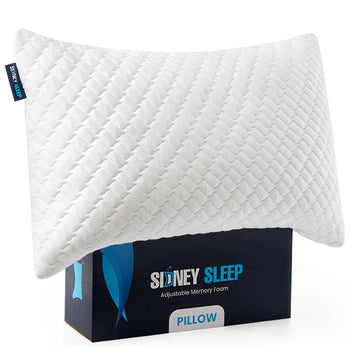
Shredded memory foam is memory foam cut into small pieces and loosely packed into a liner. It is sometimes blended with fiber. The fill in our Bamboo Curve, for example, is 75% CertiPUR-US® certified memory foam and 25% polyester fiber.
- Good: moldable, with more air between the pieces than a solid block. With a zippered inner liner, you can add or remove fill to set your height, and top it up as it settles. Our guide to shredded memory foam goes deeper.
- Watch for: it needs regular fluffing to stay even, and it is heavier than fiber fills. The foam itself shouldn't be washed. See how to wash a shredded memory foam pillow.
- What to check: look for CertiPUR-US® certified foam, which has been analyzed by independent, accredited testing laboratories and meets the program's standards for content, emissions and durability.
Microbeads
Microbeads are tiny polystyrene beads, the same idea as beanbag filling on a smaller scale.
- Good: very light and moldable. Common in travel and neck pillows.
- Watch for: they flatten faster than most fills and give only medium support.
What about gel?
Gel isn't a filling on its own. It is usually infused into memory foam or added as a layer, and marketed for a cooler feel. A "gel pillow" is normally a memory foam pillow with gel added.
Which filling for your sleep position?
- Side sleepers: shredded or solid memory foam, latex or buckwheat. You need a fill that holds enough height to fill the gap to your shoulder all night. See pillows for side sleepers.
- Back sleepers: almost any fill works at a medium height. Shredded memory foam, latex, feather and down alternative are all common choices.
- Stomach sleepers: a soft, low fill such as down or down alternative, or an adjustable pillow with most of the fill removed.
- Combination sleepers: an adjustable shredded fill, set for the position you spend most time in. It is easier to move on than solid foam or buckwheat.
Which filling for your priorities?
Firmness and height work together, so it helps to know which you need first. See firm vs soft pillows.
| If you want... | Look at | Why |
|---|---|---|
| The softest pillow | Down, then down alternative | The lightest, most compressible fills |
| The most support | Buckwheat, solid memory foam, latex | They hold their shape under your head |
| To adjust the height | Shredded memory foam, shredded latex, buckwheat | You can add or remove fill |
| To sleep cooler | Buckwheat, shredded fills, latex | Air usually moves through them more easily than through solid memory foam |
| No animal products | Down alternative, foam, latex, buckwheat, cotton, kapok | All feather-free |
| Easy washing | Polyester and down alternative | Many are machine washable. Foam and latex are spot-clean only |
| The longest life | Latex, solid memory foam, buckwheat | Durable fills; shredded foam lasts longer if you top it up |
| The lowest price | Polyester fiberfill | The cheapest common fill, but the shortest-lived |
Allergies: if you are allergic to feathers, avoid down and feather. For dust mite allergies, the fill matters less than the cover: the Asthma and Allergy Foundation of America recommends zippered allergen-barrier covers for pillows, weekly bedding washes in water at least 130°F, and replacing pillows every 2 years.
How much filling does a pillow need?
Published estimates vary a lot, because fills differ in density and everyone likes a different height. As a rough guide, from the figures in the most-read stuffing guides:
| Pillow size | Polyester fiberfill | Shredded memory foam |
|---|---|---|
| Standard (20 x 26 in) | About 1 to 1.5 lb | About 2 to 4 lb |
| Queen (20 x 30 in) | About 1.5 to 2 lb | About 4 to 5 lb |
| King (20 x 36 in) | About 2 to 2.5 lb | About 5 to 6 lb |
Down needs far less by weight (around a pound for a standard pillow), and buckwheat far more (roughly 5 to 10 pounds). Treat any number as a starting point. The right amount is whatever holds your head level in your sleep position, which is why adjustable pillows let you change it.
Can you change the filling in your pillow?
Only if you can get to it. Most pillows are sewn shut, so changing the fill means unpicking a seam, refilling and sewing it closed again. Adjustable pillows are designed for it: a zippered inner liner lets you add or remove fill in a minute, and you can top it up as it settles.
Can you mix fills? Some pillows are built that way (our shredded foam is blended with polyester fiber), and you can add a compatible fill to an adjustable pillow. Mixing very different fills, such as buckwheat with down, is likely to separate and feel uneven.
How to refill or top up a shredded fill pillow
- Work over a clean surface, or over a clean box or large bucket to catch stray pieces.
- Take off the outer cover and open the zipper on the inner liner.
- Loosen the new fill first. Fill that has been packed tightly in a bag can come out in clumps. Pull it apart by hand so the pieces are loose.
- Add one handful at a time, pushing it into the corners first and then the middle.
- Zip the liner closed and fluff the pillow. A tumble in the dryer on low heat for about 30 minutes spreads the fill evenly. That's the same step our care card recommends every couple of weeks.
- Sleep on it for a night, then add or remove another handful if you need to. Small changes make a bigger difference than you'd expect.

Add fill a handful at a time, corners first.
Keep any fill you take out. Every Sidney Sleep Bamboo Curve comes with a drawstring bag for spare foam, so you can add it back later if your preference changes or you get a new mattress. For how much to add or remove for each sleep position, see our guide to setting an adjustable pillow.
What's inside Sidney Sleep pillows
| Pillow | Fill | Adjustable? |
|---|---|---|
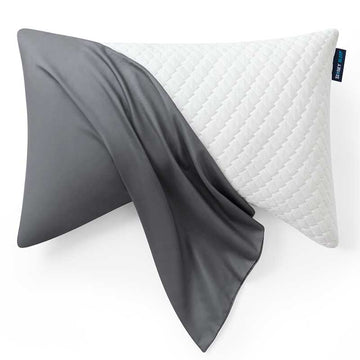
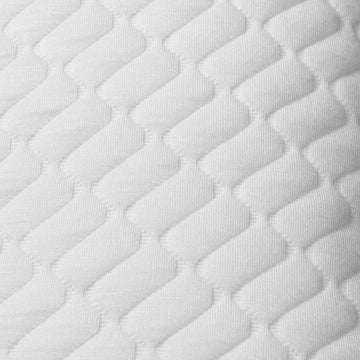
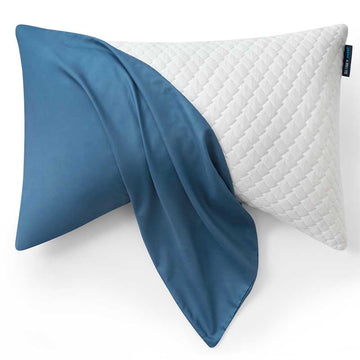
| Bamboo Curve | 75% CertiPUR-US® certified shredded memory foam, 25% polyester fiber, in a 100% polyester inner liner, with a 60% polyester, 40% bamboo rayon quilted cover | Yes. An extra bag of foam is included |
| Bamboo Classic | CertiPUR-US® certified foam blend in a rectangular shape | Yes. Unzip the inner lining to remove foam |
| Premium Hotel Pillows | Plush down-alternative fill with a microfiber cover, medium plush | No |
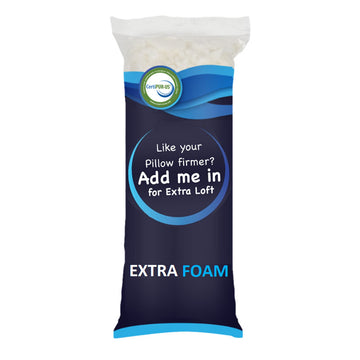
Need more fill? A bag of shredded memory foam pillow filling tops up any Sidney Sleep pillow.
FAQ
What is the best pillow filling?
There is no single best one. Down is the softest, memory foam and latex give the most consistent support, buckwheat is the firmest, and shredded fills are the easiest to adjust. The best fill is the one that suits your sleep position and holds your head level.
What pillow filling is best for side sleepers?
A fill that holds plenty of height: shredded or solid memory foam, latex or buckwheat. Adjustable shredded fills let you set the exact height for your shoulder width.
What is the softest pillow filling?
Down, followed by down alternative.
Which pillow filling lasts the longest?
Latex, solid memory foam and buckwheat usually last longest. Polyester fiberfill usually wears out first. Shredded memory foam lasts longer if you top it up as it settles.
Is shredded memory foam better than solid memory foam?
It depends on what you want. Shredded foam is adjustable and has more airflow. Solid foam gives even, firm support but comes at one fixed height. See memory foam vs down vs feather pillows for more comparisons.
Can I add more filling to my pillow?
Yes, if it has a zippered liner. Add a handful at a time, fluff it, and try it for a night. With a sewn pillow, you would need to open and re-sew a seam.
What is down alternative made of?
Usually fine polyester fibers designed to feel like down.
What filling is best for allergies?
If you react to feathers, choose a feather-free fill. For dust mites, an allergen-barrier cover and regular hot washes of your bedding matter more than the fill itself.
Sources
- International Down and Feather Testing Laboratory (IDFL). USA Labeling Questions & Answers.
- Harvard Health Publishing. Say "good night" to neck pain. 2022.
- Gordon SJ, Grimmer-Somers KA, Trott PH. Pillow use: the behavior of cervical stiffness, headache and scapular/arm pain. Journal of Pain Research. 2010;3:137–145.
- Asthma and Allergy Foundation of America. Dust Mite Allergy.
- CertiPUR-US®. About the certification.
- Fill quantities and lifespans drawn from pillow guides published by Puffy, Hullo, Mattress Nerd, Sleep Foundation, Casper and Amerisleep.
- Sidney Sleep product pages, care card and FAQ.


