







Side Sleeping With Shoulder Pain: Positions, Pillow Setup and When to See a Doctor
Oct 22, 2026
The short answer: if one shoulder hurts, sleep on the other side and hug a pillow so the sore arm rests in front of you, or sleep on your back with a small pillow under the sore arm. Keep your head pillow tall enough that your head stays level. Avoid sleeping on your stomach and with your arm tucked under your pillow. If the pain lasts more than 2 to 4 weeks despite home care, or comes with the warning signs listed below, see a health care provider.
This guide covers why side sleeping and shoulder pain so often go together, the positions and pillow setups physical therapists suggest, what your head pillow and mattress have to do with it, and when to get the shoulder checked. It is general information, not medical advice. Shoulder pain has many causes, and the right fix depends on yours.
Why does my shoulder hurt when I sleep on my side?
Side sleeping is the most common way to sleep. In a 2017 study that tracked 664 adults with motion sensors, people spent 54% of their time in bed on their side, 38% on their back and 7% on their front.
When you lie on your side, the shoulder underneath you carries much of the weight of your upper body for hours at a time. For a healthy shoulder that is usually fine. For a shoulder that is already irritated, it often isn't:
- The American Academy of Orthopaedic Surgeons lists "pain at rest and at night, especially if you are lying on the affected shoulder" among the most common symptoms of a rotator cuff tear.
- With shoulder impingement and rotator cuff tendinitis, the AAOS notes that "the pain is typically at its worst at night."
Hinge Health's physical therapist notes that sleep position and mattresses are usually not the primary cause of shoulder pain, though they can contribute. Some researchers have gone further: a 2010 paper proposed that long periods lying on the same shoulder could contribute to shoulder pain, after a small preliminary study found that the share of people sleeping on each side closely matched the share with pain on that side. It is a hypothesis, not proof, but it is one reason the advice below focuses on taking weight off the sore side.
Common causes of shoulder pain at night
Only a professional can tell you what is behind your pain. These are the causes that come up most often, based on MedlinePlus and the AAOS:
| Cause | What it is | How it often shows up at night |
|---|---|---|
| Rotator cuff tendinitis, impingement or bursitis | The rotator cuff tendons get trapped and irritated under the bony top of the shoulder, or the fluid-filled sac (bursa) that cushions the joint becomes inflamed. MedlinePlus calls this the most common cause of shoulder pain. | Pain that is often worst at night; pain lifting or reaching overhead |
| Rotator cuff tear | A partial or full tear in one of the rotator cuff tendons, more common after 40 | Pain at rest and at night, especially lying on that shoulder; weakness lifting the arm |
| Frozen shoulder | The tissue inside the shoulder stiffens and tightens | Stiffness and pain that make it hard to get comfortable |
| Arthritis | Wear of the cartilage in the shoulder joint | Aching and stiffness in the joint |
The best sleeping positions for shoulder pain
1. On your other side, hugging a pillow
If your right shoulder hurts, sleep on your left. Then stop the sore arm from falling forward across your body:
- Lie on your pain-free side with your head pillow at the right height (more on that below).
- Hold a second pillow in front of your chest and rest your sore arm on top of it, so the arm stays supported and roughly level instead of drooping toward the mattress.
- Bend your knees slightly and put a pillow between them, which helps keep your hips and spine in line.
This is the setup physical therapists recommend most often. Hinge Health's physical therapist advice is to lie on your non-sore side, place a pillow under the sore arm and hug it in front of you.
2. On your back, with a pillow under the sore arm
Back sleeping takes pressure off both shoulders. The catch is that your arms can sag down beside you, which pulls on a sore shoulder.
- Lie on your back with a medium-height pillow under your head.
- Put a small pillow or folded towel under the sore arm, between your arm and your side, so the arm is supported rather than hanging. Use one under each arm if both shoulders hurt.
- A pillow under your knees can make back sleeping more comfortable if you are not used to it.
3. If you can only sleep on the sore side
Some people can't fall asleep any other way. If that is you, take some of the weight off the shoulder:
- Roll back slightly, a quarter turn toward your back, with a pillow behind you to lean on. The shoulder carries less weight than when you lie fully on it.
- Make a gap for the shoulder: put a long pillow along your torso, leaving a gap between it and your head pillow for the shoulder and arm to sink into.
- Use a pillow that fits around the shoulder. A pillow with a curved edge sits close to your neck instead of being pushed onto your shoulder (see below).
4. Propped up
For a very painful shoulder, lying flat can be hard. Sleeping propped up on pillows, a wedge or in a recliner is more comfortable for some people. Sleep Foundation's shoulder pain guide includes a recliner among the options an orthopedic surgeon suggests.
Positions to avoid
- Stomach sleeping. There is nowhere comfortable to put your arms, and your neck stays twisted. Sleep Foundation doesn't recommend it for people with shoulder pain.
- Your arm under your pillow or above your head. It holds the shoulder in a raised position for hours.
- Lying directly on the sore shoulder without support, if you can avoid it.
Your pillow setup, step by step
Most guides talk about positions. The pillows that hold you in those positions matter just as much. For a side sleeper with one sore shoulder, a full setup looks like this:
| Pillow | Where it goes | What it does |
|---|---|---|
| Head pillow | Under your head and neck | Keeps your head level with your spine |
| Hug pillow | In front of your chest, under the top arm | Supports the sore arm so it doesn't drop forward |
| Knee pillow | Between your knees | Keeps your top leg from twisting your hips and lower back |
| Back pillow (optional) | Behind your back | Stops you rolling onto the sore side or onto your front |
Sleep Foundation also suggests a thin pillow under the back and hips for side sleepers with broad shoulders, to even out the spine.
What your head pillow has to do
Your head pillow can't treat a shoulder problem, but the wrong one can add to the strain. Sleep Foundation notes that side sleepers typically need more loft to keep the spine aligned and reduce pressure on the shoulders, and that a pillow that flattens over time can make pain worse.
- Height: enough to fill the space between your ear and the mattress, so your head doesn't drop toward the bed. Side sleepers usually need a high-loft pillow. Wider shoulders need more height.
- Staying power: fill that holds its height through the night. A pillow that is right at bedtime and flat by 3 a.m. isn't doing its job.
- Fit around the shoulder: if your shoulder pushes the pillow away, your head loses support. A curved pillow, with an inward curve on the edge nearest your body, lets the pillow sit close to your neck. Our guide to curved, contour and cervical pillows explains the shapes.
- Adjustability: the height you need can change when you switch sides, change mattress or are favoring a sore shoulder. An adjustable pillow lets you reset it.
For more on choosing a pillow, see pillows for side sleepers and how to set an adjustable pillow.
What about your mattress?
Your mattress decides how far your shoulder sinks in. Sleep Foundation notes that side sleepers generally do better on a mattress soft enough to cushion the shoulders and hips, and that one that sinks too much can make shoulder pain worse. In practice you want both: soft enough at the surface that your shoulder can sink in a little, and supportive enough underneath that your middle doesn't sag. If your mattress is too firm, a topper is a cheaper fix than a new mattress. See how your mattress can affect your sleep.
Your mattress also changes the pillow height you need. On a softer mattress your shoulder sinks lower, so you may need less pillow height. On a firmer one, more. The pillow also needs to be firm enough to hold that height all night; see firm vs soft pillows.
How to stop rolling onto your sore shoulder
Most of us change position many times a night without knowing it: about 1.6 times an hour on average in the 2017 sensor study above. A few tricks help keep you off the sore side:
- The sock trick. A physical therapist tip from Hinge Health: put a rolled-up pair of socks in the pajama pocket on your sore side, which nudges you to roll back off it.
- Pillow walls. A pillow wedged behind your back, or a long body pillow, makes it harder to roll over.
- Start the night in a better position. Even if you move later, you spend the first stretch of the night off the sore shoulder.
Don't force yourself into a position you can't sleep in. As one physical therapist puts it, "We're creatures of habit." A slightly less ideal position you can actually sleep in beats a perfect one that keeps you awake.
What else helps
- Ice for a recent flare-up. MedlinePlus suggests ice for 15 minutes, then off for 15 minutes, 3 to 4 times a day for 2 to 3 days, wrapped in cloth and never directly on the skin.
- Rest, then gentle movement. Rest the shoulder for a few days, then gradually return to normal activity, ideally with help from a physical therapist.
- Physical therapy. A physical therapist can find what is behind the pain and give you exercises for your specific problem. We have deliberately not listed stretches here, because the right exercise depends on the cause, and the wrong one can make some shoulder problems worse.
- Daytime habits. Take breaks from long overhead or repetitive tasks, switch the shoulder you carry bags on, and watch your posture at a desk.
When to see a doctor
MedlinePlus advises contacting your health care provider if you have:
- shoulder pain with fever, swelling or redness
- significant pain when the shoulder is moved
- pain lasting more than 2 to 4 weeks despite home treatment
- swelling of the shoulder
- red or blue discoloration of the skin over the shoulder
Call 911 or your local emergency number for sudden pressure or crushing pain in the shoulder, especially if it spreads to the chest, jaw, arm or neck, or comes with shortness of breath, dizziness or sweating. MedlinePlus notes that sudden left shoulder pain can sometimes be a sign of a heart attack. Go to the emergency room after a severe injury if the shoulder is very painful, swollen, bruised or bleeding.
It is also worth getting checked if you have weakness lifting or rotating your arm, or pain that wakes you up most nights. The AAOS lists both among the common symptoms of a rotator cuff tear.
How Sidney Sleep pillows fit into the setup
No pillow can treat shoulder pain, and we don't claim ours does. What our pillows can do is make the setup above easier to get right:
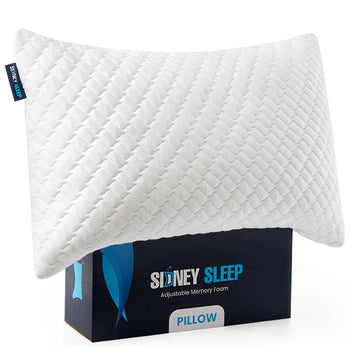
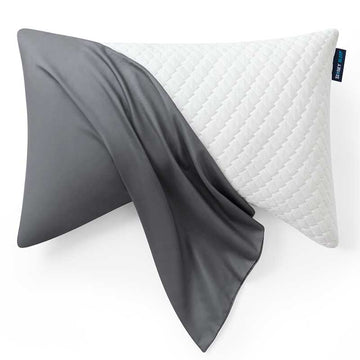
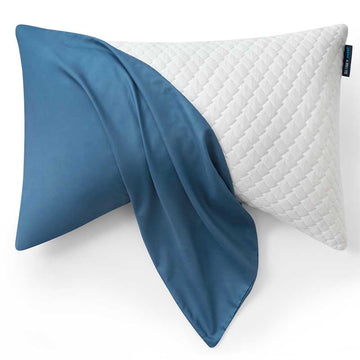
- Head pillow: the Bamboo Curve adjustable pillow. The curve contours to your shoulders, centering your head on the pillow, and the shredded memory foam fill (75% CertiPUR-US® certified memory foam, 25% polyester fiber) lets you add or remove fill to set the height. An extra bag of foam is included.
- Hug pillow: a soft second pillow works best. Our Premium Hotel Pillows are a medium-plush down-alternative pair, so one can go under your arm and the other between your knees.
- Knee pillow: the Bamboo Curve Mini (14 x 19 in) is small enough to sit between your knees.
Pillows ordered on sidneysleep.com come with a 100-night trial, so you have time to find a setup that works.
FAQ
Why does my shoulder hurt when I sleep on my side?
Lying on your side puts much of your upper body's weight on the bottom shoulder for hours. That can aggravate an existing problem such as rotator cuff tendinitis, bursitis or a tear, which often hurt more at night. Pain that lasts more than 2 to 4 weeks is worth getting checked.
Should I sleep on my painful shoulder or the other side?
The other side, if you can. Hug a pillow so the sore arm rests in front of you rather than dropping across your body.
Do I have to stop sleeping on my side?
Not necessarily. Many people with shoulder pain keep sleeping on their side, just on the pain-free side and with the sore arm supported. Back sleeping with a pillow under the sore arm is another option.
What is the best pillow for side sleepers with shoulder pain?
No pillow is proven best for shoulder pain. Look for a head pillow that keeps your head level, holds its height all night and fits close to your neck, and add a second pillow to hug. An adjustable pillow lets you fine-tune the height.
Is it bad to sleep with my arm under my pillow?
It is worth avoiding if your shoulder hurts, because it keeps the shoulder raised for hours. Often people do it because the head pillow is too low, so check your pillow height too.
Can a mattress cause shoulder pain?
A mattress is rarely the only cause, but one that is too firm or sinks too much can add pressure or strain. Side sleepers usually need enough surface softness for the shoulder to sink in slightly.
How long should shoulder pain last before I see a doctor?
MedlinePlus suggests contacting your provider if pain lasts more than 2 to 4 weeks despite home treatment, and sooner if you have fever, swelling, redness, a lot of pain when you move it, or after an injury.
Sources
- MedlinePlus, US National Library of Medicine. Shoulder pain. Reviewed September 2025.
- American Academy of Orthopaedic Surgeons, OrthoInfo. Rotator Cuff Tears and Shoulder Impingement/Rotator Cuff Tendinitis.
- Skarpsno ES, Mork PJ, Nilsen TIL, Holtermann A. Sleep positions and nocturnal body movements based on free-living accelerometer recordings. Nature and Science of Sleep. 2017;9:267–275.
- Zenian J. Sleep position and shoulder pain. Medical Hypotheses. 2010;74:639–643.
- Hinge Health. How to sleep with shoulder pain. Reviewed by Dorian Logan, PT, DPT, and Christynne Helfrich, PT, DPT. January 2025.
- Sleep Foundation. Best Pillow for Shoulder Pain. Medically reviewed by Jenny Iyo, DPT. October 2026.


