






Memory foam, down and feather are the three pillow fills people compare most, with down alternative and latex close behind. They feel very different, and each one suits a different kind of sleeper. Here is how they compare on feel, support, height, temperature and upkeep, and how to choose between them.
The short version
| Fill | Feel | Support and height | Upkeep | Often suits |
|---|---|---|---|---|
| Solid memory foam | Firm, slow to sink in | Holds its shape; fixed height | Wash the cover only | Side and back sleepers who like firm, even support |
| Shredded memory foam | Medium-firm, moldable | Holds its shape; adjustable pillows let you add or remove fill | Fluff now and then; wash the cover only | Side and back sleepers, and anyone unsure what height they need |
| Down | Very soft, light and airy | Compresses easily; least support | Fluff daily; follow the care label | Stomach sleepers and back sleepers who like a soft pillow |
| Feather | Soft but denser than down | Shapes to your neck; flattens over time | Fluff often; replace more often | Back sleepers and people who like to scrunch their pillow |
| Down alternative | Soft to medium, light | Medium at first; flattens with use | Many can be machine washed; check the label | Anyone who wants a soft, feather-free pillow |
| Latex | Springy and responsive | Holds its shape; fixed unless shredded | Wash the cover only | Sleepers who want support with some bounce |
Memory foam pillows
Memory foam is a polyurethane foam that softens under body heat and pressure, then slowly returns to its shape. It comes in two forms:
- Solid memory foam is one molded block. It gives even, firm support at a fixed height. Contour pillows are usually made this way.
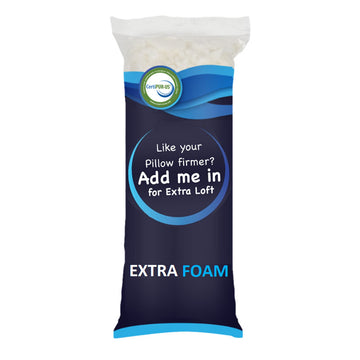
- Shredded memory foam is the same material cut into small pieces. It is more moldable, has more air between the pieces, and in an adjustable pillow you can add or remove fill to change the height.
Good: holds its height through the night, which matters most for side sleepers. Conforms to your head and neck.
Watch for: solid foam can feel firm and warm, and it is heavier than down. New foam can have a smell that airs out after a day or so. The foam itself should not be washed, so look for a removable, washable cover. Look for CertiPUR-US® certified foam, which has been analyzed by independent, accredited testing laboratories and meets the program's standards for content, emissions and durability.
Down pillows
Down is the soft, fluffy layer that grows beneath the outer feathers of ducks and geese. It has no quills, which makes it the lightest and softest of the natural fills.
Good: very soft, light and easy to shape. Squashes down low, which is what many stomach sleepers want.
Watch for: it compresses under the weight of your head, so side sleepers often find it too low unless the pillow is very full. It needs regular fluffing, and it is an animal product. Many "down" pillows are actually a down and feather blend, so check the ratio on the label.
Feather pillows
Feather pillows use the outer feathers of ducks or geese, which have a quill. That makes them heavier and a little firmer than down. Many feather pillows include some down.
Good: Harvard Health notes that a feather pillow "easily conforms to the shape of the neck." Easy to push into the shape you want.
Watch for: the same source notes that feather pillows "will collapse over time" and should be replaced every year or so. Quills can poke through the fabric, and they need frequent fluffing.
Down alternative pillows
Down alternative pillows are filled with fine polyester fibers made to feel like down.
Good: soft and light, with no feathers. Usually less expensive than real down, and many can go in the washing machine (always check the care label).
Watch for: polyester fill tends to flatten and clump over time, so it gives less lasting support than foam or latex.
Latex pillows
Latex is made from the sap of rubber trees (natural latex) or made synthetically. Like memory foam, it comes solid or shredded.
Good: springy and responsive. It pushes back rather than letting you sink in slowly, and it holds its shape well.
Watch for: it can be heavy and firm, solid latex comes at a fixed height, and it is not an option for anyone with a latex allergy.
Memory foam vs down: which should you choose?
This is the most common comparison, and it mostly comes down to how you sleep.
- Choose memory foam if you sleep on your side, want a pillow that keeps its height all night, or wake up with your head sunk into a flat pillow. Shredded memory foam gives you that support with a softer, more moldable feel.
- Choose down if you sleep on your stomach, want the softest and lightest pillow possible, or like to scrunch your pillow into shape every night.
- If you sleep warm, down and shredded foam usually feel cooler than a solid block of memory foam, because air can move through them.
Memory foam vs feather
Feather sits between down and memory foam. It is firmer and more supportive than down, but it still compresses and needs fluffing, and it flattens sooner than foam. If you like a feather pillow but find it goes flat by morning, shredded memory foam is the closest fill that holds its height.
Which fill for your sleep position?
- Side sleepers: shredded or solid memory foam, or latex. You need a pillow that fills the gap to your shoulder and keeps doing it. See our guide to pillows for side sleepers.
- Back sleepers: almost any fill can work at a medium height. Shredded memory foam, feather and down alternative are all common choices.
- Stomach sleepers: a soft, low pillow. Down, down alternative or an adjustable pillow with most of the fill taken out.
- Combination sleepers: an adjustable shredded memory foam pillow, set for the position you spend the most time in.
There are more fills than these, from buckwheat to wool. Our guide to the different types of pillows covers the rest.
Our pillows
Sidney Sleep makes two kinds of pillow:
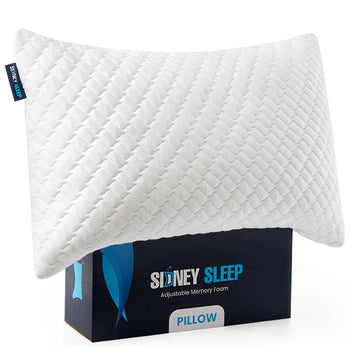
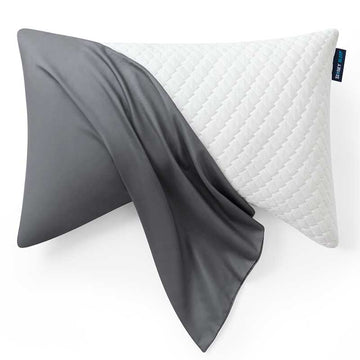
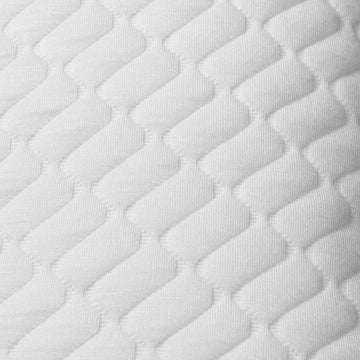
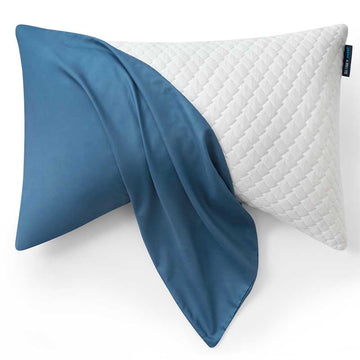
- Shredded memory foam: the Bamboo Curve adjustable pillow for side and back sleepers, with a curve that contours to your shoulders and centers your head on the pillow, and the rectangular Bamboo Classic. Both use CertiPUR-US® certified shredded memory foam inside a zippered inner liner, so you can remove fill to get the height you want.
- Down alternative: our Premium Hotel Pillows, a set of two queen pillows with plush down-alternative fill and a microfiber cover, for a soft, medium-plush hotel feel.
FAQ
Is memory foam better than down?
Neither is better for everyone. Memory foam gives more support and keeps its height, which suits side sleepers. Down is softer and lower, which suits many stomach sleepers.
Which pillow fill is best for your neck?
Height and support matter more than the fill itself. Harvard Health suggests that both feather pillows and memory foam pillows can work because they conform to the neck. Whichever you choose, it should keep your head level with your spine in the position you sleep in.
Do memory foam pillows sleep hot?
Solid memory foam can feel warm to some people because it is dense and fits closely around your head. Shredded memory foam has more air space between the pieces.
Can you wash a memory foam pillow?
Wash the cover, not the foam. Wet memory foam soaks up water and is very hard to dry. Down, feather and down alternative pillows are often washable, but always follow the care label.
Which pillow fill lasts longest?
Foam and latex usually keep their shape longer than feather or polyester fill. Whatever the fill, here is how often to change your pillow.
Sources
- Harvard Health Publishing. Say "good night" to neck pain. 2022.
- CertiPUR-US®. About the certification.


