






The short answer: solid memory foam pillows can sleep warm, because the foam is dense and fits closely around your head, which traps heat and limits airflow. Shredded memory foam usually sleeps cooler, because air moves between the pieces. "Cooling" features such as gel, graphite and phase change materials can make a pillow feel cooler to the touch, though how long that lasts varies. And for many people, the room and bedding matter more than the pillow. If you sweat through the night regularly, whatever your bedding, that is worth mentioning to a doctor.
This guide explains why memory foam holds heat, how solid and shredded foam compare with other fills, what the cooling technologies actually do, what makes the biggest difference to sleeping cooler, and when night sweats aren't about your pillow at all. We make shredded memory foam pillows without gel or other cooling additives, so we have tried to be straight about what actually helps.
Why memory foam pillows can feel hot
- Density. Solid memory foam is a dense block with little room for air to move, so warm, humid air from your skin stays put. Sleep Foundation notes that memory foam "may retain heat and restrict airflow."
- Close contact. Memory foam molds closely to your head and neck. More contact means more of your body heat goes into the pillow, and less escapes around it. Sleep Foundation notes that memory foam absorbs body heat.
- Heat-sensitive softening. Memory foam softens as it warms, so your head can sink in further over the night, increasing contact.
- The cover. A thick or non-breathable cover, or a waterproof protector, can hold heat in no matter what is inside.
Solid vs shredded memory foam
This is the biggest single difference within memory foam pillows. Sleep Foundation's cooling guide puts it plainly: "a solid piece of foam will generally retain more heat than shredded foam," because air circulates more freely through shredded fill.

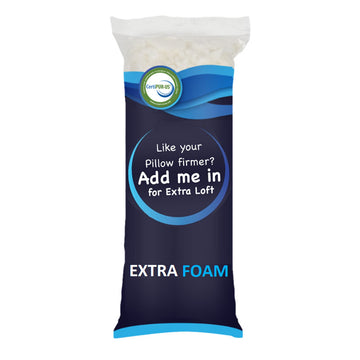
Loose shredded foam leaves air between the pieces, which is why it generally sleeps cooler than a solid block.
Shredded foam still conforms to your head, so it isn't as open as buckwheat hulls, but the gaps between pieces let heat and moisture move. Fluffing it regularly keeps those gaps open; a pillow that has packed down flat behaves more like a solid block. Our shredded memory foam pillow guide explains how it works.
How the main pillow fills compare for heat
| Fill | Heat | Why |
|---|---|---|
| Solid memory foam | Warmest | Dense, close-fitting, little airflow |
| Shredded memory foam | Cooler than solid | Air moves between the pieces |
| Latex | Can hold some heat; aerated latex is cooler | Pin-hole aeration helps heat escape |
| Down | Insulating | Traps warm air; good in cold rooms |
| Down alternative / polyester | Moderate | Sleep Foundation notes it is less likely to retain heat than down, but dense fiber can still trap warmth |
| Wool | Moderate | Can pull heat and moisture away in warm conditions |
| Buckwheat hulls | Coolest | Rigid hulls leave large air pockets |
For a full comparison of fills beyond heat, see pillow filling types explained.
What "cooling" pillow features actually do
| Feature | What it does | The catch |
|---|---|---|
| Cooling gel | Infused into foam or added as a layer; draws heat away and feels cool to the touch | Some brands argue gel absorbs heat rather than removing it, so the cool feeling fades. We haven't seen independent tests that settle how long it lasts |
| Graphite or copper infusions | Marketed to draw heat away from the body | Claims vary by brand; there is little independent testing |
| Phase change material (PCM) | Usually in the cover; absorbs heat as it changes state, then releases it | Feels cool at first, but it can only absorb a limited amount of heat before it stops feeling cool |
| Vents or channels | Holes or cut-outs in solid foam to let air through | Helps solid foam, but shredded foam already has airflow |
| Breathable covers | Cotton, bamboo rayon and similar fabrics that let moisture escape | Help on any pillow, and easy to change |
The honest summary: cool-to-the-touch features change how a pillow feels when you lie down. Airflow, breathable fabric and a cooler room are what keep you comfortable hours later.
The biggest levers: your room and bedding
How warm you sleep depends on much more than your pillow. A 2012 review in the Journal of Physiological Anthropology found that in real-life conditions, with bedding and clothing, heat exposure increases wakefulness and reduces deep (slow-wave) and REM sleep, and that humid heat increases the load further.
- Cool the room. Lower the thermostat, open a window or run a fan. Moving air carries heat away from your skin.
- Deal with humidity. Humid heat is harder on sleep than dry heat. A fan, air conditioning or a dehumidifier helps.
- Lighten the bedding. A heavy comforter traps far more heat than a pillow does.
- Choose breathable fabrics. Cotton or linen sheets and a breathable pillowcase let moisture escape. Sleep Foundation notes bamboo fabrics are moisture-wicking and lightweight.
- Skip the plastic. Waterproof pillow and mattress protectors can trap heat. If you need one, look for a breathable version.
Pillow-specific tips for hot sleepers
- Choose shredded over solid if you want memory foam.
- Fluff it daily so the fill stays loose and airy.
- Flip it. The side that has been under your head is warmer. Turning the pillow over gives you a cooler surface.
- Use a breathable pillowcase, and wash it weekly. A pillowcase full of oils and sweat breathes less well.
- Don't over-fill an adjustable pillow. A pillow packed tight has less air space. Keep the height you need, no more. Our guide to setting an adjustable pillow explains how to find it.
- Air it out. Taking the cover off and airing the inner liner now and then lets trapped moisture escape. See how to wash a shredded memory foam pillow for the full routine.
When it isn't your pillow: night sweats
Feeling warm in a hot room is one thing. Regularly waking up soaked, even in a cool room, is another. MedlinePlus lists common causes of heavy sweating, including:
- menopause (hot flashes)
- infection and fever
- certain medicines
- low blood sugar
- withdrawal from alcohol, sedatives or narcotic painkillers
MedlinePlus advises contacting your health care provider if you "often sweat during sleep," if sweating is heavy, long-lasting or unexplained, or if it comes with chest pain or pressure, fever, a rapid or pounding heartbeat, shortness of breath or weight loss. A different pillow won't fix any of those.
What about our pillow?
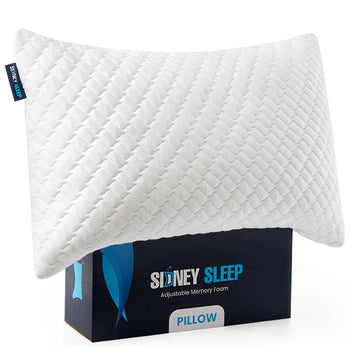
The Sidney Sleep Bamboo Curve doesn't contain gel or any other cooling additive. What it does have:
- Shredded fill, not a solid block: 75% CertiPUR-US® certified shredded memory foam and 25% polyester fiber, with air space between the pieces.
- An adjustable fill, so you can keep the height you need without over-packing it.
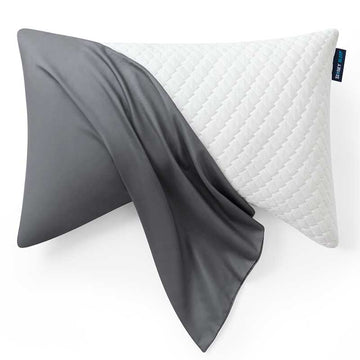
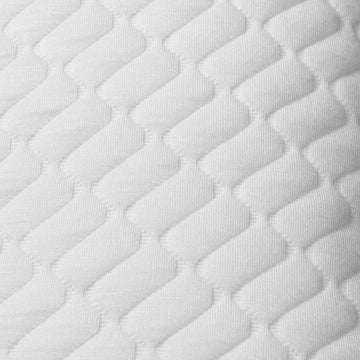
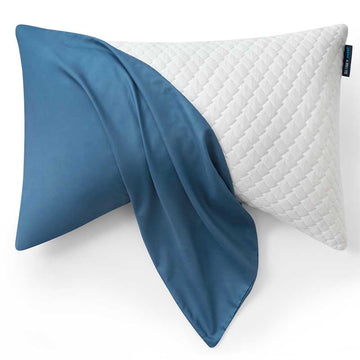
- A removable, machine-washable cover (60% polyester, 40% bamboo rayon) that you can wash weekly with your sheets.
If you run very hot, pair it with breathable bedding and a cooler room. That combination matters more than any single pillow feature.
FAQ
Do memory foam pillows sleep hot?
Solid memory foam can, because it is dense and fits closely. Shredded memory foam generally sleeps cooler because air moves between the pieces.
Is shredded memory foam cooler than solid memory foam?
Generally yes. Sleep Foundation notes that a solid piece of foam will generally retain more heat than shredded foam.
Do cooling pillows really work?
They usually feel cooler when you first lie down. How long that lasts depends on the design. Airflow, breathable fabric and room temperature make the longer-lasting difference.
What pillow fill is best for hot sleepers?
The most open fills, such as buckwheat, sleep coolest. Shredded foam and aerated latex are cooler than solid memory foam. Down is the most insulating.
Why does my pillow get hot during the night?
Your head warms the fill, and close-fitting fills hold that heat. Flipping the pillow, fluffing it and using a breathable pillowcase all help.
Can a pillow cause night sweats?
A warm pillow can make you feel hotter, but regular drenching night sweats usually have another cause. MedlinePlus advises seeing a provider if you often sweat during sleep.
Are bamboo pillows cooler?
In most bamboo pillows, the bamboo is in the cover fabric. Bamboo rayon is moisture-wicking and lightweight, which can help, but the fill and your bedding matter more.
Sources
- Sleep Foundation. Best Cooling Pillows. Updated October 2026.
- Okamoto-Mizuno K, Mizuno K. Effects of thermal environment on sleep and circadian rhythm. Journal of Physiological Anthropology. 2012;31:14.
- MedlinePlus, US National Library of Medicine. Sweating. Reviewed May 2025.
- Cooling-feature descriptions also drawn from the cooling pillow guides published by Hullo, Nest Bedding and Amerisleep.
- Sidney Sleep product pages.


